

Trusting Your Parent Instincts: When That Little Voice Says Something Isn’t Quite Right
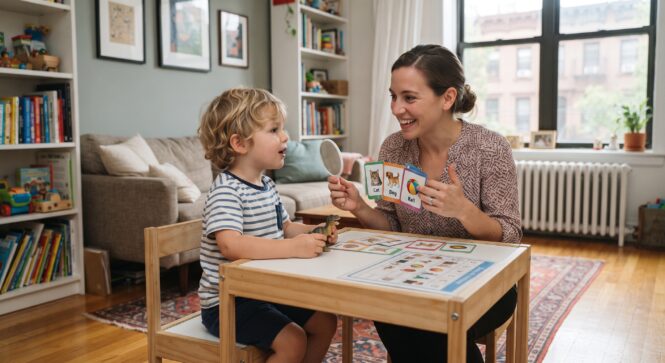
Most parents can remember the exact moment they first wondered whether something might be different about their child’s development.
It usually isn’t a dramatic event.
There isn’t a sudden emergency or a single milestone that’s dramatically missed.
Instead, it’s often something much quieter.
Your toddler says fewer words than children the same age at the playground.
Your preschooler understands everything you say but rarely joins conversations.
Your kindergartener seems bright and curious but avoids books whenever possible.
Your second grader comes home exhausted after reading assignments that seem effortless for classmates.
Or perhaps your child is happy, playful, and eager to communicate—but other people frequently ask them to repeat what they’ve said.
Individually, none of these moments may seem especially concerning.
But over weeks or months, they begin forming a pattern.
And that’s when parents often notice something difficult to explain.
A quiet feeling.
A persistent question.
A sense that something isn’t quite adding up.
Almost immediately, advice begins arriving from every direction.
“Every child develops at their own pace.”
“My nephew didn’t talk until he was almost four.”
“Don’t compare your child to others.”
“Give it more time.”
Much of this advice is offered with kindness.
And sometimes it’s absolutely correct.
Children really do develop at different rates.
Development isn’t a race.
Every child has unique strengths, interests, and learning styles.
But even after hearing reassurance from family members, friends, and well-meaning strangers, many parents still find themselves thinking:
“Why can’t I shake this feeling?”
That question is more common than many families realize.
Parents are often the very first people to notice subtle developmental differences—not because they are experts in child development, but because they spend thousands of hours observing their child across every part of daily life.
Unlike anyone else, parents witness the ordinary moments that reveal how children truly communicate, learn, solve problems, and interact with the world.
That perspective is incredibly valuable.
It’s also why developmental professionals take parent observations seriously.
Parent intuition isn’t a medical diagnosis.
It doesn’t automatically mean something is wrong.
But it often serves as an important starting point for asking thoughtful questions, gathering information, and understanding whether a child may benefit from additional support.
Rather than wondering,
“Am I overreacting?”
a more helpful question is:
“What patterns am I noticing, and what might those patterns be telling me?”
Approaching concerns this way shifts the focus away from fear and toward curiosity.
It encourages parents to observe carefully, ask informed questions, and seek guidance when needed—without jumping to conclusions.
In this article, you’ll learn:
why parent intuition often plays an important role in recognizing developmental differences
why observing patterns matters more than focusing on isolated events
how child development naturally varies while still following predictable pathways
when “wait and see” may be appropriate—and when it may be helpful to seek additional information
practical ways to organize your observations
when professional guidance may provide reassurance or useful next steps
how Brooklyn Letters partners with families to better understand children’s communication, language, literacy, and learning
The goal isn’t to convince every parent that something is wrong.
It’s to help families trust their observations, ask thoughtful questions, and feel confident making informed decisions that support their child’s growth.
Key Facts
- Parents are often the first people to notice subtle developmental differences because they observe their child across many everyday situations.
- Parent intuition is not a diagnosis, but it can highlight patterns that deserve thoughtful attention.
- Child development naturally varies, yet communication, language, literacy, and learning skills generally develop within broad developmental ranges.
- Ongoing patterns are usually more informative than isolated behaviors.
- Seeking an evaluation is about gathering information—not labeling a child or assuming the worst.
Quick Answer: Should I Trust My Parent Instincts About My Child’s Development?
Yes.
Parents spend more time observing their children than anyone else.
Because they see communication, play, learning, emotions, and daily routines across many different situations, they are often the first to notice gradual developmental patterns.
While parent intuition cannot diagnose a developmental difference, persistent concerns deserve thoughtful attention rather than dismissal.
If you’ve noticed the same challenges over several months—or if teachers, caregivers, or other trusted adults share similar observations—it may be worthwhile to seek professional guidance.
An evaluation doesn’t assume something is wrong. Instead, a comprehensive speech-language and literacy testing evaluation provides the objective data families need to move from uncertainty to a clear support plan
Parents See the Whole Picture
Every professional who works with your child sees an important part of their development.
Teachers observe classroom learning.
Pediatricians monitor health and developmental milestones during scheduled visits.
Speech-language pathologists evaluate communication.
Reading specialists examine literacy skills.
Caregivers witness interactions during specific parts of the day.
Each perspective matters.
But none of those professionals experience the countless ordinary moments that parents do.
Parents see everything in between.
You notice:
- conversations during breakfast
- bedtime routines
- imaginative play
- homework frustrations
- interactions with siblings
- visits with grandparents
- playground conversations
- grocery store questions
- quiet moments after school
- the way your child reacts when plans suddenly change
These everyday experiences provide something no single assessment can fully capture.
They reveal patterns.
Perhaps your child understands complex instructions at home but struggles to explain their own ideas.
Maybe they happily tell stories while playing independently but become unusually quiet in unfamiliar situations.
Or perhaps reading a single page requires far more effort than seems typical, even though your child is clearly intelligent and curious.
Because these observations happen gradually, parents often recognize subtle changes long before anyone else does.
That doesn’t mean every concern signals a developmental challenge.
But it does mean your observations provide valuable information that deserves consideration.
Information Gain: Parent Intuition Is Often Pattern Recognition
People sometimes describe intuition as a mysterious “gut feeling.”
In reality, what many parents call intuition is often something much more concrete.
It’s pattern recognition.
Without realizing it, parents continuously collect information about their child’s development.
You notice:
- new words being used
- changes in behavior
- increasing independence
- problem-solving skills
- communication during play
- emotional responses
- classroom experiences
- social interactions
Your brain naturally compares today’s experiences with yesterday’s.
Over weeks and months, these countless observations begin forming a larger picture.
Sometimes that picture is reassuring.
You notice steady progress, increasing confidence, and new skills emerging naturally.
Other times, you notice that certain challenges remain surprisingly consistent.
Perhaps communication still feels unusually difficult.
Reading still requires extraordinary effort.
Writing remains frustrating despite practice.
Speech continues to be difficult for unfamiliar listeners to understand.
These repeated observations—not isolated moments—often create the quiet sense that something deserves closer attention.
Rather than viewing intuition as unexplained worry, it can be helpful to think of it as your brain recognizing meaningful developmental patterns.
Our specialized learning differences support helps families understand how bright children sometimes use their strengths to mask hidden academic hurdles.
Information Gain: Observing Patterns Is Different From Worrying
Many parents hesitate to talk about developmental concerns because they fear being seen as anxious or overprotective.
There’s an important difference between persistent worry and careful observation.
Worry often asks:
“What if something is terribly wrong?”
Observation asks:
“What am I consistently noticing?”
Observation focuses on facts.
For example:
- Homework regularly takes much longer than expected.
- Teachers have mentioned similar concerns.
- Speech is easier for family members to understand than strangers.
- Reading progress has remained slow despite consistent practice.
- Everyday communication is becoming more frustrating instead of easier.
These are measurable patterns rather than assumptions.
Looking for patterns helps families make thoughtful decisions based on evidence instead of fear.
It also creates more productive conversations with professionals, who often rely on parent observations to better understand how children function across different environments.
Recognizing patterns doesn’t mean expecting the worst.
It means paying attention to your child’s individual developmental journey and responding thoughtfully when questions continue to arise.
Information Gain: Small Concerns Often Become Clearer Over Time
Developmental differences rarely become obvious overnight.
Instead, parents often notice tiny observations accumulating over weeks, months, or even years.
At first, a concern may feel easy to dismiss.
“Maybe they’re just shy.”
“Maybe they need more practice.”
“Maybe they’ll catch up.”
Sometimes those explanations are exactly right.
Children often make remarkable progress with time and experience.
But when the same questions continue resurfacing despite steady growth in other areas, those observations become increasingly meaningful.
This gradual accumulation of information is one reason professionals often ask parents detailed questions about developmental history.
Parents remember the small moments that no standardized assessment can fully capture.
Those observations help create a richer, more complete understanding of how a child learns, communicates, and develops across everyday life.
Every Child Develops Differently—But Development Still Follows Patterns
One of the most reassuring truths about childhood is that no two children develop in exactly the same way.
Some toddlers begin speaking in full sentences before their second birthday.
Others communicate primarily through gestures for much longer before their language suddenly blossoms.
Some children seem drawn to books almost immediately.
Others would rather spend hours building elaborate block towers or exploring outdoors before developing a strong interest in reading.
Even siblings raised in the same home can reach milestones at noticeably different times.
This variation is completely normal.
Development isn’t a race, and children aren’t expected to master every new skill on the same schedule.
At the same time, child development isn’t entirely unpredictable.
Communication, language, literacy, learning, and social skills generally emerge in broad developmental sequences that researchers and clinicians have observed across thousands of children.
These developmental patterns help professionals understand how children typically grow—not to compare children against one another, but to recognize when additional support might be beneficial.
The key isn’t asking,
“Is my child exactly like every other child?”
Instead, it’s asking,
“Is my child continuing to make meaningful progress over time?”
Progress—not perfection—is what matters most.
Information Gain: Developmental Milestones Are Flexible Guides, Not Rigid Deadlines
Parents sometimes worry that developmental milestones function like strict pass-or-fail tests.
Fortunately, that’s not how developmental professionals use them.
Milestones are better understood as guideposts.
They describe the broad age ranges during which most children acquire certain communication, language, motor, literacy, and learning skills.
Some children naturally reach these milestones earlier.
Others develop a little later while continuing to progress steadily.
Both patterns can be completely healthy.
Professionals don’t become concerned simply because one milestone appears a few weeks or months later than another child’s.
Instead, they look at the overall developmental picture.
Questions often include:
- Is the child continuing to gain new skills?
- Are communication abilities becoming stronger?
- Is learning becoming easier over time?
- Are developmental gaps narrowing, remaining stable, or becoming wider?
- Is the child successfully participating in everyday activities?
Looking at development this way provides a far more accurate understanding than focusing on any single milestone in isolation.
Progress Matters More Than Comparison
It’s natural for parents to compare.
The comparisons often happen automatically.
You notice another child confidently introducing themselves.
You watch classmates reading chapter books.
You hear a younger cousin speaking in long, detailed sentences.
These moments can easily raise questions.
But comparisons rarely tell the full story.
Every child develops within the context of their own:
- personality
- learning style
- interests
- experiences
- opportunities
- strengths
- challenges
A child who speaks later may demonstrate remarkable problem-solving skills.
Another child may read fluently while needing additional support with social communication.
One child may excel academically while finding writing unusually difficult.
Development is rarely perfectly balanced across every area.
Rather than comparing children to one another, developmental specialists focus on an individual child’s own pattern of growth.
The most important question becomes:
“Is my child moving forward?”
Even gradual progress is meaningful.
When progress slows significantly or seems to stop altogether, that’s often more informative than how a child compares with peers.
Information Gain: Growth Is Often Uneven—and That’s Completely Normal
Parents sometimes expect development to move forward in a straight line.
In reality, childhood growth is often uneven.
Children frequently make rapid gains in one area while another area appears relatively unchanged.
For example, a child may suddenly:
- begin using longer sentences
- become much more socially confident
- develop stronger problem-solving skills
- show increased independence
Meanwhile, reading, writing, speech clarity, or attention may continue developing more gradually.
This uneven growth doesn’t necessarily indicate a problem.
Instead, it reflects the remarkable complexity of child development.
Different skills rely on different brain systems, experiences, and opportunities for practice.
Recognizing this helps parents avoid unnecessary worry when one skill develops faster than another.
Professionals look at the overall developmental profile rather than expecting perfectly even progress across every domain.
How Brooklyn Letters Supports Families
At Brooklyn Letters, we believe one of the greatest strengths in any child’s support team is an informed, observant parent.
Parents know their children better than anyone else.
They notice the small victories that happen between therapy sessions.
They recognize subtle changes that occur over weeks and months.
They understand what motivates their child, what causes frustration, and what brings out their confidence.
That’s why families are never passive participants in the support process—they are essential partners.
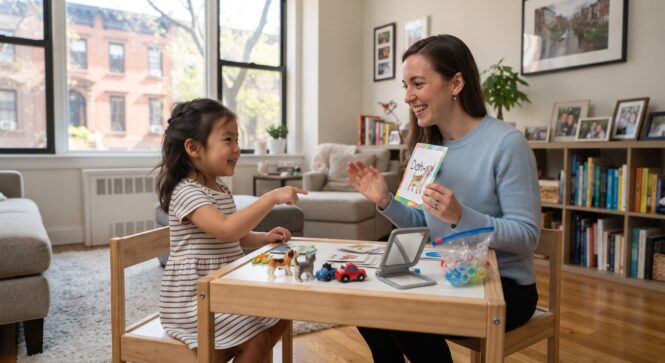
Our team of speech-language pathologists, literacy specialists, and educational professionals works collaboratively with families to understand the complete picture of a child’s development.
Rather than focusing on a single challenge, we consider how communication, language, literacy, executive functioning, learning, and confidence interact in everyday life.
A comprehensive evaluation helps us answer important questions such as:
- What are this child’s greatest strengths?
- Which skills are developing as expected?
- Which areas may benefit from additional support?
- Why do certain activities feel more challenging?
- Which evidence-based strategies are most likely to help?
Every child is unique.
For that reason, every recommendation is individualized.
Support may include:
- speech-language therapy
- literacy intervention
- reading and writing support
- executive functioning strategies
- parent coaching
- school collaboration
- individualized educational planning
Just as importantly, families receive practical guidance they can confidently use at home.
Small changes in everyday routines often create meaningful opportunities for continued growth between sessions.
Our goal isn’t simply to identify challenges.
It’s to help children build the communication, literacy, learning, and confidence they need to thrive at home, at school, and throughout their lives.
Our professionals work collaboratively with families to understand the complete picture of a child’s development through individualized NYC speech-language therapy designed to help children build the confidence they need to thrive.
Frequently Asked Questions
Is parent intuition really important?
Yes.
Research and clinical experience consistently show that parents are often the first people to notice subtle developmental differences because they observe their children across many everyday situations.
While intuition alone cannot diagnose a developmental difference, persistent observations provide valuable information that professionals consider during evaluations.
How do I know if I’m overreacting?
Most parents who seek guidance aren’t reacting to one isolated event.
Instead, they’re responding to patterns they’ve noticed over time.
If the same concerns continue for several months—or if teachers or caregivers observe similar challenges—it’s reasonable to ask questions and seek additional information.
Seeking guidance is a thoughtful response, not an overreaction.
Should I wait before requesting an evaluation?
Sometimes waiting is appropriate, particularly when children continue making steady developmental progress.
However, “wait and see” works best when paired with ongoing observation.
If concerns remain consistent, frustration increases, or progress slows significantly, discussing your observations with a qualified professional may provide valuable clarity.
Will an evaluation automatically lead to therapy?
No.
An evaluation gathers information about your child’s development.
Some children benefit from therapy or targeted intervention.
Others simply require continued monitoring, classroom strategies, or reassurance that development is progressing appropriately.
Every recommendation is individualized.
What if the evaluation finds nothing concerning?
That can be an excellent outcome.
Many families leave evaluations feeling reassured.
Having a professional confirm that development is progressing as expected often reduces anxiety and provides greater confidence moving forward.
Peace of mind is a valuable outcome in itself.
Can early support help even if challenges seem mild?
Absolutely.
Support isn’t reserved only for children experiencing significant difficulties.
Small adjustments made early may improve communication, literacy, learning, and confidence while helping prevent frustration from increasing over time.
What should I bring to an evaluation?
Parents often find it helpful to bring:
- notes about ongoing observations
- school reports
- teacher feedback
- examples of reading or writing if relevant
- questions they’d like answered
- information about developmental history
These details help professionals understand how a child functions across different environments.
What if teachers aren’t concerned but I still am?
Teachers observe children primarily within the classroom.
Parents observe children across many more situations and over much longer periods of time.
If concerns continue despite reassuring school reports, it’s still appropriate to discuss your observations with your pediatrician or another qualified professional.
Different environments often reveal different aspects of development.
Information Gain: Trusting Your Instincts Doesn’t Replace Professional Expertise
Some parents worry that trusting their instincts means ignoring professional advice.
In reality, the two work best together.
Parent observations and professional expertise complement one another.
Parents contribute:
- everyday experiences
- developmental history
- observations across settings
- knowledge of routines
- awareness of subtle changes over time
Professionals contribute:
- developmental expertise
- standardized assessments
- clinical observation
- evidence-based recommendations
- individualized intervention planning
When these perspectives are combined, families gain a much more complete understanding of a child’s strengths and needs.
The goal isn’t to choose between intuition and expertise.
It’s to use both together.
Information Gain: Clarity Gives Families Confidence
One of the greatest benefits of seeking guidance is not necessarily receiving a diagnosis.
It’s reducing uncertainty.
When families understand why a child is experiencing certain challenges, decision-making becomes much easier.
Instead of wondering:
“Should I be worried?”
Parents begin asking:
“What can we do next?”
That shift changes everything.
Clarity allows families to:
- make informed decisions
- advocate confidently at school
- support learning at home
- celebrate strengths alongside challenges
- focus on practical solutions rather than uncertainty
Whether an evaluation leads to reassurance, monitoring, or intervention, understanding your child’s unique developmental profile empowers your family to move forward with confidence.
Parent Reflection Checklist
As you think about your child’s development, ask yourself:
- Have I noticed consistent patterns over time?
- Is my child continuing to make meaningful progress?
- Do teachers or caregivers share similar observations?
- Is my child becoming increasingly frustrated during communication or learning?
- Are strengths and challenges becoming easier to describe?
- Would additional information help me better support my child?
- Am I seeking clarity rather than certainty?
There are no perfect answers.
The goal is to remain curious, informed, and responsive to your child’s individual journey.
Your Instincts Are Part of Your Child’s Support System
Every parent knows what it’s feels like to notice something that others don’t.
Sometimes that feeling fades as children grow and develop.
Other times, it becomes the first step toward understanding how a child learns, communicates, or experiences the world.
Neither outcome means your instincts were wrong.
They simply served their purpose.
Your observations encouraged you to pay attention, ask thoughtful questions, and seek reliable information.
That is exactly what strong advocacy looks like.
Children benefit most when the adults around them work together—parents, educators, pediatricians, speech-language pathologists, literacy specialists, and other professionals—each contributing their unique perspective.
Trusting your instincts doesn’t mean assuming something is wrong.
It means recognizing that you know your child well enough to notice when something deserves a closer look.
That curiosity, combined with professional guidance when needed, can help children receive the support that allows them to communicate, learn, and grow with confidence.
A Reassuring Next Step
If you’ve had that quiet feeling that something about your child’s communication, learning, or development deserves a closer look, you don’t have to ignore it—and you don’t have to navigate those questions alone.
At Brooklyn Letters, we partner with families to better understand each child’s strengths, identify areas where additional support may be helpful, and create individualized plans that build confidence in communication, literacy, and learning.
Seeking guidance isn’t about expecting a diagnosis.
It’s about gaining clarity, asking informed questions, and making decisions that help your child thrive—both now and in the future.

How Brooklyn Letters Supports Clear Communication
At Brooklyn Letters, we understand that clear speech is about much more than pronouncing sounds correctly. It’s about helping children communicate with confidence wherever life takes them.
Whether they’re answering a teacher’s question, making a new friend on the playground, telling a grandparent about their day, or sharing an exciting idea at dinner, children deserve to feel understood. That’s why our speech-language pathologists look beyond individual speech sounds to evaluate each child’s complete communication profile.
Our approach looks at the child’s complete communication profile rather than just isolated sounds. We provide comprehensive NYC speech-language therapy tailored to help children find their voice and feel understood in any environment
Frequently Asked Questions
Why can I understand my child perfectly when other people can’t?
Parents and close family members hear their child’s speech every day. Over time, they naturally learn to recognize pronunciation patterns, anticipate common word substitutions, and use context to understand what the child intends to say. Someone hearing your child for the first time doesn’t have those advantages.
What is speech intelligibility?
Speech intelligibility refers to how easily another person can understand what a child says. It focuses on successful communication rather than perfect pronunciation. A child may make several speech sound errors while still being highly intelligible.
Will my child outgrow speech sound errors?
Many speech sound differences improve naturally as children mature. However, if speech remains difficult for unfamiliar listeners to understand or continues affecting communication over time, a speech-language evaluation can help determine whether additional support would be beneficial.
Call: (347) 394-3485, Text: (917) 426-8880
Email: info@brooklynletters.com
(we respond to emails right away!)


Craig Selinger
Latest posts by Craig Selinger (see all)
- You’re Not Alone: Support for Parents Worried About Their Child’s Learning | Brooklyn Letters - September 14, 2026
- Should I Trust My Gut Feeling About My Child? | Brooklyn Letters - September 11, 2026
- My Child Is Smart but Has Poor Grades | Brooklyn Letters - September 10, 2026
