search

Brooklyn Letters IconBrooklyn Letters

1139 Prospect Avenue, Brooklyn

4.9 56 reviews

  • Avatar Emily Matles ★★★★★ a week ago
    We would highly recommend Ally! Our son always asks about her, so very thankful to Brooklyn Letters for introducing us.
    ~ Emily, mom of Brooklyn 2 year old
  • Avatar T Ainsley ★★★★★ 5 months ago
    I cannot express how grateful and rewarding my experience with Brooklyn Letters has been. Her tutor Ms. Daria is so knowledgeable, amazing, kind and awesome. My daughter has made so much progress in Literacy and Math and it's all … More thanks to Ms. Daria. I know my daughter is sad that she can no longer work with Ms. Daria, as she looked forward to their sessions every week. Thank you again!
  • Avatar Natalie Levon ★★★★★ 4 months ago
    Nicole has been an amazing therapist!! She played a tremendous role in our daughter’s speech progress and overall development. She has come such a long way and we are so happy with the therapy she received!
  • Avatar Colin Peters ★★★★★ 6 months ago
    We could not be happier with the services Valerie provided! She is very thoughtful and knowledgeable and provided significant guidance to support our daughter's speech development outside of our scheduled sessions. She established … More a great working relationship with her, and she will definitely be missed! Your business model is amazing and it was an absolute pleasure working with Valerie. I've referred your organization and Valerie to the Executive Director of our daughter's school and friends/colleagues who are in need of speech therapy services.
  • Avatar Lil Amatore ★★★★★ 7 months ago
    Christina was absolutely wonderful. She went out of her way to win my son over and it worked. He looked forward to her visits and his speech improved so much under her care. She was super flexible and it’s clear she truly cares. We adore … More Christina and we’re going to miss her. Almost sad he improved so much! She’s simply amazing and we can’t say enough how great she is. I would recommend her services to anyone and everyone, without hesitation. Thank you so much for connecting us with her!
  • Avatar Heather Liljengren ★★★★★ a year ago
    We cannot say enough good things about Effie, the ASL teacher, who was so engaged and effective with our 2 year old daughter from the very first session! Effie gladly included our whole family in the sessions! Her expertise and fantastic … More personality gave our daughter a way to communicate that she was so desperately seeking. The coordinators at Brooklyn Letters were so helpful and communicative…I would highly recommend their services!
  • Avatar Brigid Bower ★★★★★ 11 months ago
    Samantha Dalmas was fantastic! We saw her for a feeding therapy evaluation and while she doesn’t think my daughter needs more feeding therapy sessions at this time, but she gave me lots of tips to try. If my daughter's doctors want … More to see more progress at her next appointment, I wouldn’t hesitate to reach out to Samantha again.
  • Avatar Duygu Başaran ★★★★★ 11 months ago
    Brooklyn Letters was recommended to me through a friend's speech therapist friend in NJ. The articulation evaluation for my daughter went well. We were pleased with Kristin's services.
  • Avatar Kelley Peters-Patel ★★★★★ a year ago
    Melissa was wonderful. Our daughter warmed to her immediately and by the time she left, had already started "practicing" some of the techniques Melissa had shown her. I will not hesitate at all to reach out to Melissa again, should … More the need arise.
  • Avatar R Elmore ★★★★★ a year ago
    Aileen was INCREDIBLY helpful to us, both in assessing possible origins of my grandson's food aversions, as well as informing us of various available interventions to consider.
    I can’t thank you and Brooklyn Letters enough for connecting
    … More us with Aileen. In all our feeding therapy journey we have not gotten anything near the kind of benefit that we did from her. Her knowledge, professionalism, and responsiveness have put us on the path of progress with my grandson and has also made us feel genuinely well cared for.
  • Avatar Christine Weiher ★★★★★ 2 years ago
    We were amazed with Allison! She met my son at 2 1/2 years old, not speaking much at all, and over a computer, and she was able to develop a bond and friendship, so much so that he would look forward to his weekly computer time with Allison. … More I was not sure how the speech therapy would go- but we are so happy that we tried it out and continued. It allowed my son to gain confidence in his speech, make a new friend :), and also give him the skills and a bit of understanding of how to shape his mouth or where to place his tongue to make the proper sounds. We were extremely happy with Allison- she was fantastic to work with.
  • Avatar Andrea Saffady ★★★★★ 2 years ago
    My sessions with Karen have been extremely helpful. My speech has improved tremendously. In fact, I just finished 2 hours of conducting interviews with a consulting client via MS Teams and I have an upcoming conference call. Both my … More neurologist and neurosurgeon remarked about how good my speech is. Much of the day it is perfect, although I still have some rough spots when I get tired or speak too quickly. One of my granddaughters is a speech pathology student at Ithaca College. She sat in on 2 sessions while she was home for winter break, and she was very impressed with Karen.
  • Avatar Jacob B ★★★★★ 4 years ago
    We were delighted with Christie. First, and most importantly, our son made great strides under her guidance. So great, that we felt he no longer needed help! She was incredibly patient and kind with him and our son really responded to … More her. Christie was also great with me and my wife. She provided thorough and informative updates on our son's progress and which exercises she was using with him, so we could reinforce what she was teaching him. All in all, we had a fabulous experience with Christie and would highly recommend her.
  • Avatar Jessica C ★★★★★ a year ago
    Theo was wonderful and his work with my son has produced some progress. I am grateful for the services Theo provided.
  • Avatar Melissa Stevens ★★★★★ 2 years ago
    Highly recommend Jill. She is a total pleasure to work with. After a few months working with Jill, my son is reading above grade level and LOVES to read. Mission accomplished!
  • Avatar Demet Evren ★★★★★ 2 years ago
    Paige was great and we had been really happy with her. I would highly recommend her! I recommend Brooklyn Letters to whomever asks for a speech therapist.
  • Avatar Jeizel Rosenthal ★★★★★ 2 years ago
    Isabel was WONDERFUL and our son absolutely adored her, and he is making great progress with his reading and writing.
  • Avatar Lesley Duval ★★★★★ 3 years ago
    Theo was fantastic with our 4yo son. We were very worried that his progress would fall off when we had to switch to remote sessions, but Theo kept our son happy and engaged through the screen. Highly highly recommend!
  • Avatar Samantha Packard ★★★★★ 3 years ago
    We've been working with Theo from Brooklyn Letters for close to 4 months now and the results are apparent; our daughter has vastly improved her speech in a relatively short amount of time. We make "Theo Day" a celebration … More in our house with pancakes for breakfast, and the enthusiasm is matched in the sessions. Theo is fun, patient, professional, and caring, and he gives us the tools to take the lessons beyond the session. Thank you Theo, and Brooklyn Letters, for helping our daughter express herself.
  • Avatar Travis Ricca ★★★★★ 3 years ago
    I worked with Alina to enhance my pronunciation, tone, and pacing while communicating socially and in a work environment. She was great to work with and clear about goals and learning objectives. The improvement from day 1 has been tremendous! … More
  • Avatar Enrico Bermudez ★★★★★ 3 years ago
    Cathy has been excellent with us and our son. We will sorely miss her. He has improved significantly with Cathy’s help. Cathy was a true partner with us, especially as we pursued additional help through our son’s school system.
  • Avatar Kayne Elisabeth Wilk ★★★★★ 4 years ago
    We really loved working with Alina, she is so fantastic. Patient yet firm, and determined the best course of action very clearly and succintly for us. And it all transitioned so well to Zoom as well. I will definitely be back in touch for … More services for our other child after summer break!
  • Avatar Jen S ★★★★★ 4 years ago
    Vera was amazing! My 11 yo daughter made progress so quickly and really looked forward to her sessions. She was kept motivated and engaged.
  • Avatar susie tofte ★★★★★ 3 years ago
    The work that Allison P. did with our daughter over the years has been invaluable to us. Our daughter had such a good relationship with Allison, and it allowed them to work really well together - even remotely these past 6 months. This … More year, Allison went above and beyond by helping us throughout the neuropsych eval we did, trying to re-open our daughter's IEP at her school, and eventually landing her at our chosen school. She was in contact with our daughter's teachers, with the neuropsychologist, and made herself available as a reference to speak on behalf of our daughter's learning differences.
    Allison stopped by our house last week to give our daughter cupcakes and say goodbye, and I literally cried with appreciation for what an amazing speech therapist she has been. She has been our daughter's biggest champion. The new families that she will work with this year are lucky to have her.
  • Avatar Alicia Perez-Katz ★★★★★ 4 years ago
    Sydney was great! Our son was sad to end his sessions with her, which says a lot. We appreciated her honest assessment of his skill level, and he now has materials to self monitor and practice. Thank you!
  • Avatar Kristin Ames ★★★★★ 4 years ago
    Our experience with Theo was terrific. Theo was great with my son. He developed a positive relationship with him based on sincerity, respect, trust and a deep personal connection. In their lessons, Theo was encouraging, creative and kind. … More He helped our son understand how to differentiate the sounds he made when he spoke, and gave him great exercises to practice every week between lessons. Our son was sorry to have the lessons come to an end, but recognized that Theo had helped him as much as possible and it was time for him to stop. Theo explained to him (and us) how to keep working to get the last 5%, and encouraged him to keep working on the exercises on his own. I have recommended Theo to another parent who noticed my son's improvement and inquired for her own son.
    We are all grateful to have gotten to know Theo, and we greatly appreciate all the work he did to help our son.
  • Avatar Aisha Holder ★★★★★ 4 years ago
    "I have nothing but wonderful things to say about Michelle Macroy-Higgins. We are extremely pleased with her work with our daughter. I was so grateful for my daughter to have a speech therapist who is a researcher (specialty in late … More talkers), graduate professor and practitioner. Her expertise was clearly evident in our conversations and work with our daughter. She was very responsive to my questions and often sent articles and other materials about language development that I found helpful. Thankfully, my daughter's speech improved tremendously. Michelle developed such a warm relationship with my daughter. My daughter was always excited to see Michelle and would greet her at the door with a big hug. Lastly, I would add that Michelle always demonstrated empathy with me as a mother who was initially worried about her daughter's language development. I could go on and on about how pleased we were with Michelle's work."
  • Avatar Andrea Peartree ★★★★★ 4 years ago
    Theo is a wonderful Clinton Hill speech therapist. We were really pleased with him. Our son showed drastic improvement, not only in his speech but in his confidence.
  • Avatar mario costa ★★★★★ 4 years ago
    Alexa has been an enthusiastic, reliable, well prepared and caring teacher for our 6 year old daughter. She has been able to improve and increase our daughter's confidence lesson by lesson with patience and competence; through varied … More and productive didactic practice. Alexa has engaged our daughter in several activities that always kept her motivated and eager to learn literacy. My wife and I, both of us are educators, feel so fortunate to have had the opportunity to observe Alexa's pedagogical skills. Alexa has had a big impact on our daughter literacy growth. Thank you Brooklyn Letters!
  • Avatar Lily Alt ★★★★★ 4 years ago
    We were absolutely DELIGHTED with Marsha's services. She was wonderful. We found her to be kind, fun, engaging, very knowledgeable. She provided us with clear instructions and additional written handouts each week. She engaged our … More son with different techniques and toys, and showed us how to use her techniques when we were interacting with him. I actually just texted her on Saturday - Our son finally said "more" - one of the target words we had been working on with her. It was a total joy to hear, and I had to share it with her - she wrote back immediately to congratulate us. I am so appreciative of her expertise, and wish we could have seen her for longer. I recommended her to another family in our neighborhood who is looking for a speech therapist.

Yelp (also view our 35+ filtered reviews)

DYSLEXIA IN BRIGHT STUDENTS: WHY SMART KIDS CAN STILL STRUGGLE TO READ

DYSLEXIA IN BRIGHT STUDENTS WHY SMART KIDS CAN STILL STRUGGLE TO READ

DYSLEXIA IN BRIGHT STUDENTS: WHY SMART KIDS CAN STILL STRUGGLE TO READ

DYSLEXIA IN BRIGHT STUDENTS WHY SMART KIDS CAN STILL STRUGGLE TO READ
As Featured In:
As Featured In:

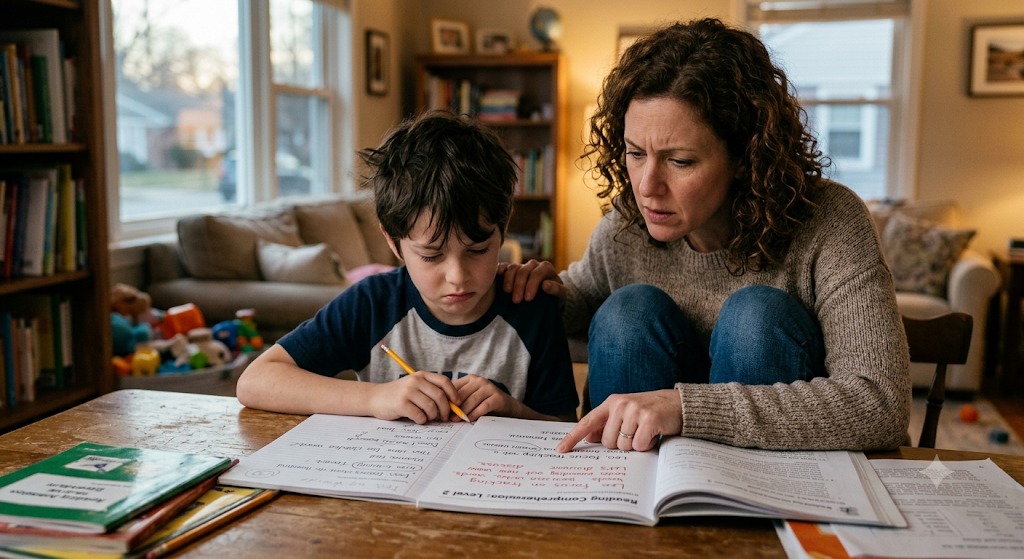
Dyslexia in bright students can be confusing for parents, teachers, and even the students themselves. A child may be curious, verbal, creative, and strong in many areas, yet still struggle with reading, spelling, writing, or finishing schoolwork efficiently. According to the International Dyslexia Association, dyslexia is a language-based learning difference that can affect word reading, spelling, and decoding, regardless of intelligence.

Because these students often compensate well, their dyslexia symptoms may be missed for years. Some bright children memorize words, rely on context clues, avoid reading aloud, or use strong reasoning skills to hide reading difficulties. Others may do well in conversation but fall apart when asked to read independently, spell accurately, or write organized paragraphs.

This guide explains what dyslexia in bright students can look like, why smart children can still struggle with reading, and when parents may want to consider dyslexia testing, structured literacy support, or dyslexia tutoring.

Key Facts About Dyslexia in Bright Students

Dyslexia can affect children with average, high, or gifted-level reasoning ability.

  • Bright students may hide dyslexia by memorizing words, guessing from context, or avoiding reading aloud.
  • Slow reading, weak spelling, and fatigue during reading can be signs of dyslexia even when comprehension is strong.
  • Dyslexia testing can clarify whether decoding, fluency, spelling, writing, or language processing is affecting school performance.
  • Structured literacy instruction directly teaches the sound, spelling, and word patterns many dyslexic students need.
  • Some bright students with dyslexia are also twice exceptional, meaning they have advanced abilities alongside a learning difference.
  • Dyslexic children may show strong creativity, verbal reasoning, problem-solving, or curiosity while still having difficulty with reading.

Brooklyn Letters supports families through a language-to-literacy lens, connecting reading development, structured literacy, speech-language literacy testing, and language-based learning intervention when appropriate.

What Dyslexia in Bright Students Can Look Like

What Dyslexia in Bright Students Can Look Like

Dyslexia is not a reflection of intelligence.

Many children with dyslexia are bright, articulate, imaginative, and capable of complex thinking. The challenge is that their reading and spelling skills may not match their reasoning ability, verbal knowledge, or classroom potential.

A bright student with dyslexia may understand advanced ideas when listening but struggle to read grade-level text independently. They may give thoughtful verbal answers but write very little. They may know the content but perform poorly on tests because reading takes too long.

Parents often notice a gap between what the child seems capable of and what appears on paper. Dyslexia in gifted students can be especially hard to recognize because strengths can mask weaknesses. A child may perform “well enough” for years but become increasingly overwhelmed as reading, writing, and workload demands increase.

Why Smart Children Can Still Struggle With Reading

Reading requires specific language and print skills that do not develop automatically for every child.

A child can be intelligent and still have difficulty with phonological processing, decoding, spelling, or automatic word recognition. Reading requires the brain to connect sounds, letters, word patterns, language, memory, and meaning.

Some bright students rely on memorization, guessing, or context to get through early reading tasks. This can work for simple books, but it becomes less effective as words become longer, texts become denser, and school assignments require more independent reading.

A smart child struggling to read may not always look like a typical struggling reader. They may understand stories read aloud, use sophisticated vocabulary in conversation, or excel in math, science, art, building, or problem-solving. The reading disorder may only become obvious when the child is asked to decode unfamiliar words, spell, read quickly, or write under time pressure.

Training/Certifications

Why Dyslexia Is Often Missed in NYC Students

Bright students with dyslexia may compensate for years before school reading and writing demands expose the gap.

In NYC public, private, and specialized school environments, bright students may keep up early by relying on memory, verbal reasoning, parental support, or strong classroom participation. Reading and writing challenges often become more visible when assignments become longer, timed reading increases, spelling expectations rise, or written responses carry more weight.

This pattern can be especially common in competitive school settings where students are expected to manage dense reading, multi-step writing assignments, and independent study habits. A child may still appear capable in discussion while struggling to decode unfamiliar words, spell accurately, or complete written work efficiently.

Parents may hear that the child is “too smart to have dyslexia” or that they simply need to try harder. In reality, dyslexia and high IQ can coexist. A child can be intellectually advanced and still need explicit reading support.

Stealth Dyslexia Symptoms Parents Often Miss

Stealth dyslexia describes reading and writing difficulties that are hidden by strong reasoning, memory, or verbal ability.

Stealth dyslexia is often used to describe students whose intelligence, memory, verbal reasoning, or compensation strategies hide their dyslexia symptoms. These students may not fail early reading screenings, but they still work much harder than peers to read and write.

Common stealth dyslexia symptoms may include:

  • Reading slowly even when comprehension is strong
  • Avoiding reading aloud
  • Guessing words from context
  • Skipping small words or word endings
  • Strong listening comprehension but weak independent reading
  • Poor spelling despite strong verbal ability
  • Trouble writing down ideas clearly
  • Fatigue after reading or writing tasks
  • Difficulty finishing homework efficiently
  • Strong oral answers but weak written responses
  • Anxiety around reading, spelling, or timed work

These signs can be easy to miss because the student may still sound knowledgeable, participate in class, and understand material when it is discussed aloud.

What Parents Are Saying About Our Therapists

“

She established a close relationship with her and helped her to jump several reading levels. Thanks to Rachel,
my daughter is now a confident reader! I am very happy that I reached out to you and I will certainly recommend Long Island Letters in the future.

- Joseph, fatherRachel has been an amazing tutor for my daughter
“

Amy is a fantastic speech therapist, reading strategist, and confidence-builder! MY now 7-year-old son was having difficulty with
enunciation, and, perhaps relatedly, hesitating to try reading aloud. I was concerned about taking him to a speech therapist because
I did not want to make him (more) self-conscious. A year ago, craig at Brooklyn Letters recommended Amy, and the whole family has
come to rely on her. MY 7-year old's speech is much clearer than it was, and Amy has taught htm a bunch of different strategies to try
if he is unsure how to make a sound or read a word, which greatly reinforced his reading learning at school. Amy saw immediately
how to win my shy son's confidence (ask htm to explain how to play chess to her), and targeted her strategies to his strengths
(numbers and sports!) so that he could work on the new skills while feeling good about himselt MY son looks forward to Amy's weekly
visits immensely (tt is also really helpful that she comes to our house!). Amy recently told me that she thought he was ready to
graduate from their sessions, and I immediately felt like this would be a real loss for him and for me as a parent because I have so
come to value Amy's advice. so I persuaded her to work with him once a week on Spanish (Amy is bi-lingual), which he has just
begun at school, and on homework strategies. I am so grateful to her.

- DeidreI am so grateful to her.
“

Alina worked with my son Matthew for a few months and I wanted to provide you with a testimonial you could use to help others
realize the great support she provided. She was really wonderful!
Alina worked with my son for just a few months and was able to get htm speaking so everyone could understand him. At first, he
wouldn't speak to his friends at pre-school as he was embarrassed since they couldn't understand him. A few months later and he
was talking up a storm with them and asking their moms for playdates. NOW we can't get him to stop talking. Alina was amazing with
Matthew! She changed his world and I am so grateful!

- JulieShe changed his world and I'm so grateful!
Check out other testimonials

Signs of Dyslexia in Children With Strong Verbal Skills

Strong spoken language can make dyslexia harder for parents and teachers to recognize.

Some children with dyslexia are excellent conversationalists. They may tell elaborate stories, ask thoughtful questions, and seem advanced in their understanding of the world. This can make reading and spelling struggles seem unexpected.

Signs of dyslexia in children with strong verbal skills may include difficulty sounding out unfamiliar words, inconsistent spelling, trouble remembering sight words, slow reading, weak decoding, or difficulty reading nonsense words. They may also confuse similar-looking words or misread small function words such as “of,” “for,” “from,” “the,” or “was.”

A child may understand complex ideas when discussed aloud but struggle to access the same information through print. This gap between oral language and written language is one reason dyslexia in bright students is often overlooked.

Dyslexia, High IQ, and Twice-Exceptional Learners

Twice-exceptional students can have advanced abilities and dyslexia at the same time.

Twice-exceptional dyslexia refers to students who are gifted or highly capable in some areas while also having dyslexia or another learning difference. These students may show advanced reasoning, creativity, problem-solving, curiosity, or verbal ability, while also struggling with reading, spelling, writing, organization, or processing speed.

Bright students with dyslexia may be twice exceptional learners in NYC, meaning they have advanced abilities in some areas alongside a learning difference. These students may be overlooked because their strengths compensate for reading weaknesses, or because their reading struggles hide advanced reasoning.

For parents, the key question is not whether the child is “smart enough.” The better question is whether reading, spelling, writing, or fluency skills are keeping the child from showing what they understand.

Twice-exceptional learners can be difficult to support because their strengths and weaknesses may cancel each other out on standardized measures. A student may score in the average range overall, even though their profile shows meaningful gaps between reasoning ability and reading-related skills.

For gifted dyslexic students, the emotional impact can be significant. They often know they are capable, but they cannot understand why reading, spelling, or writing feels so hard. This can lead to frustration, avoidance, perfectionism, or lowered confidence.

Understanding giftedness is important because strong reasoning skills can sometimes hide reading weaknesses. The connection between giftedness and dyslexia can also explain why some students appear highly capable in conversation, creativity, or problem-solving while still needing direct reading support. Many gifted children and gifted people with dyslexia thrive when instruction recognizes both their strengths and their learning needs.

Reading Red Flags in Bright Students

Reading Red Flags in Bright Students

Slow, effortful, or inaccurate reading can be a red flag even when a child understands stories read aloud.

Parents often notice that something feels inconsistent. The child may be able to explain a science concept, build complex structures, or understand advanced conversations but still struggle with basic reading tasks.

Reading red flags may include:

  • Slow reading
  • Choppy oral reading
  • Guessing based on the first letter
  • Difficulty sounding out unfamiliar words
  • Trouble reading longer words
  • Avoiding chapter books
  • Losing place while reading
  • Re-reading the same sentence multiple times
  • Weak reading fluency
  • Difficulty reading under time pressure
  • Understanding better when someone else reads aloud

If a child reads slowly but understands when read to, this may suggest that decoding or reading fluency is interfering with comprehension. Families can learn more about reading fluency difficulties and how they affect struggling readers.

Spelling and Writing Red Flags

Dyslexia often affects spelling and written output, not only reading accuracy.

A bright child may have strong ideas but struggle to get them onto paper. They may write less than expected, use simpler words in writing than in speech, or avoid writing assignments altogether.

Spelling red flags may include:

  • Inconsistent spelling of the same word
  • Difficulty remembering spelling patterns
  • Trouble spelling high-frequency words
  • Phonetic spelling that persists beyond the expected age
  • Confusing vowel sounds
  • Leaving out sounds or syllables
  • Weak proofreading
  • Avoiding written work

Writing red flags may include short written responses, difficulty organizing thoughts, slow output, poor sentence structure, or frustration when asked to write. Some students with stealth dyslexia and writing difficulties are mistakenly viewed as careless or unmotivated when the real issue is a language-based learning difficulty.

Meet our CEO
Presented at:

When a Bright Child Reads Slowly or Guesses at Words

Guessing at words can hide weak decoding until reading demands become more complex.

A bright child may use intelligence to compensate for weak decoding. They may look at the first letter of a word, use pictures, rely on memory, or guess based on context. This can make early reading appear stronger than it really is.

As books become more complex, guessing becomes less reliable. The child may misread words, skip details, or lose the meaning of the passage. Reading becomes tiring because the child is constantly working around weak word recognition skills.

Slow reading can also affect homework, test performance, and confidence. A student may know the material but run out of time because reading takes too long. This is one reason dyslexia in bright students may not be noticed until later in elementary school, middle school, or even high school.

What Does Dyslexia Look Like in School?

Dyslexia may become more visible as independent reading, writing, and test demands increase.

Dyslexia symptoms may become more visible as school expectations increase. In early grades, the child may struggle with phonics, sight words, spelling, or reading aloud. In later grades, the child may struggle with textbook reading, note-taking, writing assignments, foreign language, timed tests, or keeping up with large amounts of reading.

Teachers may notice that the student participates well in discussion but avoids written work. They may see strong ideas but weak spelling, grammar, or organization. The student may appear inconsistent: capable one day and overwhelmed the next.

Some kids with dyslexia become anxious, frustrated, or resistant to schoolwork. Others become quiet and try to hide their struggles. A child who has always been praised for being smart may feel embarrassed when reading and writing do not come easily.

Dyslexia and Reading Comprehension

Dyslexia and Reading Comprehension

Dyslexia can affect comprehension when decoding and fluency use too much mental effort.

Not all bright students with dyslexia have weak comprehension. Some understand very well when text is read aloud but struggle when they have to read independently. In these cases, comprehension may break down because decoding and fluency require so much mental effort.

Other students may have both decoding and language comprehension challenges. They may struggle to understand vocabulary, sentence structure, inference, figurative language, or the main idea of a passage. In some cases, families notice poor comprehension when the child reads independently, even though listening comprehension is much stronger.

If your child can read the words but has difficulty understanding, remembering, or discussing what they read, reading comprehension tutors in NYC may be helpful. If the issue is sounding out unfamiliar words, decoding tutoring may be a better starting point.

Dyslexia Testing and Evaluation

Dyslexia testing can help explain why a bright student struggles with reading, spelling, writing, or fluency.

Dyslexia testing can help explain why a bright student is struggling. A comprehensive evaluation may look at phonological processing, decoding, word recognition, spelling, reading fluency, reading comprehension, writing, memory, processing speed, and related language skills.

Parents often search for a dyslexia reading test or ask how to get their child tested for dyslexia. While online screeners can sometimes identify risk factors, they do not replace a full evaluation. A proper assessment helps determine whether the child has dyslexia, another reading disorder, a language-based learning difference, ADHD, or overlapping needs. A clear diagnosis can help families understand whether the child needs structured literacy, school accommodations, or additional language-based support.

Brooklyn Letters offers speech-language literacy testing for families who want to better understand the connection between language, reading, writing, and learning.

Professional Help for Bright Students With Dyslexia

Professional dyslexia support should clarify the child’s learning profile before selecting an intervention plan.

For some bright students, the right next step is a full literacy evaluation. For others, structured literacy instruction can begin after parents already have testing results from a school, neuropsychologist, or speech-language literacy provider.

Brooklyn Letters offers several pathways for families trying to understand what kind of help fits their child:

How to Get Your Child Tested for Dyslexia

Parents can begin by documenting reading, spelling, writing, fluency, and homework patterns.

If you suspect dyslexia, start by documenting what you notice. Write down examples of reading errors, spelling patterns, homework struggles, avoidance, fatigue, or differences between oral and written performance.

Parents may also speak with the child’s teacher, pediatrician, school team, or a private evaluator. Useful questions include:

  • Is my child reading at grade level?
  • Are decoding and spelling skills developing as expected?
  • Does my child read slowly or inaccurately?
  • Is comprehension stronger when text is read aloud?
  • Are writing problems related to spelling, organization, or language?
  • Should my child receive a full dyslexia evaluation?

Testing can help move the conversation away from “try harder” and toward a clear understanding of what support the child needs. Families who want a clearer picture of decoding, spelling, reading fluency, and comprehension may also consider a reading and literacy assessment or an SLP literacy evaluation with a dyslexia focus.

Dyslexia Evaluation Options

A dyslexia evaluation can identify whether reading difficulty is connected to decoding, spelling, fluency, comprehension, writing, or language processing.

Families may consider different types of assessment depending on the child’s needs. A reading and literacy assessment can help clarify decoding, spelling, fluency, and comprehension skills.

An SLP literacy evaluation with a dyslexia focus may be useful when parents suspect that language processing, phonological awareness, expressive language, or academic language skills are contributing to reading and writing struggles.

Emotional Signs Parents Should Notice

Emotional Signs Parents Should Notice

Reading struggles can affect confidence even when a child has clear strengths.

Dyslexia can affect more than academics. A bright child who struggles with reading may feel confused, ashamed, or frustrated. They may compare themselves to peers and wonder why school feels harder than it should.

Emotional signs may include:

  • Avoiding homework
  • Saying “I’m dumb” despite clear strengths
  • Meltdowns during reading or writing
  • Anxiety before tests
  • Refusing to read aloud
  • Perfectionism
  • Low confidence
  • Complaints of headaches or fatigue during reading
  • Saying reading is boring or pointless

These behaviors may be signs of stress, not laziness. When children receive the right kind of support, their confidence often improves along with their skills.

How Structured Literacy Can Help

Structured literacy teaches reading and spelling through explicit, systematic instruction.

Bright students with dyslexia usually need explicit, systematic reading instruction. Structured literacy teaches the sound structure of language, phonics patterns, decoding, spelling, word recognition, fluency, vocabulary, and comprehension in a clear sequence.

This approach is different from simply asking a child to read more. More reading practice can help only when the child has the tools needed to read accurately. If decoding is weak, repeated exposure without instruction may increase frustration.

Structured literacy tutoring can help students understand how words work. It can also reduce guessing, improve spelling, build reading fluency, and support confidence. For many students, targeted reading intervention is the difference between working around dyslexia and actually building stronger reading skills.

Structured Literacy, Orton-Gillingham, and Wilson Reading Support

Structured literacy teaches dyslexic students how sounds, letters, syllables, spelling patterns, and word meanings work together.

Many bright students with dyslexia need explicit instruction rather than more general reading practice. Structured literacy may include phonemic awareness, phonics, decoding, spelling, morphology, fluency, vocabulary, and comprehension.

Families may explore Orton-Gillingham tutoring in NYC when a child needs multisensory reading instruction. Some students may benefit from Wilson Reading System tutoring in NYC when decoding and spelling needs are significant.

Parents who already know their child needs specialized support can also review Brooklyn Letters dyslexia tutors and coaches for in-home and remote options.

Dyslexia Tutoring for Bright Students

Dyslexia tutoring should be individualized, structured, and responsive to the student’s learning profile.

A dyslexia tutoring program may include phonemic awareness, phonics, decoding, encoding, spelling patterns, fluency, morphology, vocabulary, and comprehension. The right plan depends on the child’s age, reading level, testing history, school demands, and emotional response to reading.

Tutoring for dyslexia can be especially helpful for bright students because it gives them a clear explanation for why reading has been hard. They often benefit from direct instruction that respects their intelligence while filling in missing foundational skills.

Brooklyn Letters provides individualized NYC literacy services for students with reading, spelling, writing, and language-based learning needs. Families looking for more specialized support may also explore dyslexia tutoring in the NYC metro area or dyslexia tutors and coaches.

How Brooklyn Letters Looks at Bright Students With Dyslexia

Brooklyn Letters evaluates dyslexia through a language-to-literacy lens.

Brooklyn Letters looks at decoding, spelling, reading fluency, comprehension, written expression, phonological awareness, and language processing together. This broader view can help families understand whether the child needs structured literacy intervention, speech-language literacy testing, or broader language-based learning support.

For some children, the main challenge is decoding. For others, reading difficulty overlaps with expressive language, comprehension, written organization, attention, or academic language demands. Understanding the full profile helps families choose support that fits the child rather than relying on a generic reading plan.

Brooklyn Letters’ work is especially relevant for children whose reading struggles sit at the intersection of language development, literacy, dyslexia, and school performance.

Orton-Gillingham, Wilson, and Dyslexia Support

Orton-Gillingham, Wilson, and Dyslexia Support

Orton-Gillingham and Wilson are structured approaches often used to support students with dyslexia.

Many students with dyslexia benefit from Orton-Gillingham-informed instruction or other structured literacy approaches. These methods are explicit, sequential, multisensory, and designed to help students connect sounds, letters, syllables, spelling patterns, and meaning.

The Wilson Reading System is another structured literacy program that may support students with significant decoding and spelling needs. The right approach depends on the child’s profile, age, reading level, attention, motivation, and previous instruction.

For some bright students, the biggest shift is realizing that reading difficulty is not about intelligence. With the right instruction, they can learn strategies that make reading and spelling more manageable.

Families may explore Orton-Gillingham tutoring NYC or Wilson Reading System tutoring NYC when a child needs systematic support with decoding, spelling, fluency, and word recognition.

When Dyslexia Overlaps With ADHD or Executive Function Challenges

Dyslexia can overlap with attention, executive function, language, or anxiety-related challenges.

Some bright students with dyslexia also have ADHD, executive function challenges, anxiety, or language difficulties. These overlapping needs can make school even more complicated.

A student may struggle to decode words, organize written work, remember assignments, manage time, or sustain attention during reading. Parents may wonder whether the issue is dyslexia, ADHD, motivation, or all of the above.

A careful evaluation can help clarify the pattern. Support may need to address reading instruction, writing skills, executive functioning, and emotional confidence together. Families can also explore broader learning differences support when dyslexia overlaps with attention, executive functioning, language, or school-based challenges.

Dyslexia, Creativity, and Strength-Based Support

Many dyslexic individuals have strong visual thinking, storytelling ability, problem-solving skills, design thinking, or imagination. While every learner is different, conversations about dyslexia and creativity can help families see the whole child, not only the reading challenge.

Dyslexia is a learning disability, but it does not define a child’s intelligence, potential, or future success. The goal of support is not to ignore the child’s weaknesses or overfocus on their strengths. The goal is to understand the full learning profile and provide instruction that helps the child access reading, writing, and schoolwork with more confidence.

What Parents Can Do at Home

Parents can support a bright child with dyslexia by reducing shame and choosing evidence-based help.

Parents can support a bright child with dyslexia by reminding the child that dyslexia is not a measure of intelligence. The goal is not to lower expectations, but to provide the right kind of instruction and access.

Helpful steps include:

  • Read aloud to your child to maintain vocabulary and knowledge
  • Use audiobooks for access to grade-level content
  • Avoid forcing long independent reading sessions without support
  • Notice patterns in reading, spelling, and writing errors
  • Praise effort and persistence
  • Ask the school about reading data and interventions
  • Seek evaluation if concerns persist
  • Choose evidence-based reading support

Audiobooks and assistive tools do not replace reading instruction, but they can help children continue learning while their reading skills are developing.

When to Seek Help

Parents may want to seek help when reading, spelling, or writing struggles persist despite intelligence and practice.

Parents may want to seek help if a bright child continues to struggle with reading, spelling, writing, fluency, or comprehension despite practice and support. Waiting can increase frustration and make the child feel that school difficulty is their fault.

Consider support if your child:

  • Reads below grade level
  • Reads slowly or inaccurately
  • Guesses at unfamiliar words
  • Avoids reading aloud
  • Spells inconsistently
  • Writes far less than they can say
  • Needs excessive time for homework
  • Understands better when someone reads aloud
  • Shows anxiety, frustration, or shame around reading
  • Has a large gap between verbal ability and written work

A child does not need to fail before receiving help. If parents, teachers, or the child are noticing a consistent pattern, evaluation or structured literacy support may provide useful answers.

Frequently Asked Questions Dyslexia in Bright Students

Frequently Asked Questions Dyslexia in Bright Students

1.Can a gifted child have dyslexia?

Yes. Dyslexia can affect students with strong reasoning, verbal ability, creativity, or gifted-level thinking.

2. Why is dyslexia missed in bright students?

Bright students may compensate by memorizing words, guessing from context, relying on listening comprehension, or avoiding reading aloud.

3. What are signs of stealth dyslexia?

Common signs include slow reading, weak spelling, fatigue during reading, guessing unfamiliar words, and stronger oral answers than written work.

4. Should my child get dyslexia testing?

Testing may help if reading, spelling, writing, or fluency problems persist despite strong intelligence and regular practice.

5. What kind of tutoring helps dyslexic students?

Many dyslexic students benefit from structured literacy instruction that explicitly teaches decoding, spelling patterns, fluency, and word structure.

Contact Brooklyn Letters

Schedule a free 15-minute consultation if your bright child is struggling with reading, spelling, writing, or reading fluency. Brooklyn Letters can help you determine whether literacy testing, dyslexia tutoring, structured literacy intervention, or speech-language literacy support is the right next step.

Prefer to call or email? Text or call (917) 426-8880 or email info@brooklynletters.com

You’re Not Alone-We’ll Guide You Through Every Step

Parents often feel unsure about whether their child’s literacy challenges are typical or indicators of deeper decoding or spelling difficulties. Our literacy specialists will walk you through the entire assessment process-from reviewing prior evaluations to creating targeted, research-backed literacy goals. We make the process clear, supportive, and stress-free so you know exactly what your child needs next.

Close Menu