Posts Tagged ‘Learning’

Pediatric Neuropsychological Evaluations: FAQs by Lindsay Whitman, Ph.D., Pediatric Neuropsychologist

Wednesday, October 3rd, 2012

What is pediatric neuropsychology? Pediatric neuropsychology is a specialty that focuses on cognition, learning, and behavior in children and adolescents. A pediatric neuropsychologist typically holds a Ph.D. in clinical psychology and is specially trained to understand the ways that thinking, learning, and behavior are associated with neurodevelopment, brain structures, and brain systems.

A pediatric neuropsychologist uses standardized tests to measure cognitive skills such as attention, executive functioning, memory, visuospatial processing, and language. A pediatric neuropsychologist utilizes the numerical results of these “objective” tests in conjunction with parent/teacher reported functional difficulties, a child’s behavioral presentation, and a detailed clinical history to draw conclusions, consider clinical diagnoses, and generate recommendations.

Pediatric neuropsychologists often work with a child’s doctors and/or therapists to help set goals, monitor progress, and manage expectations. They commonly consult with teachers and/or school officials to help provide necessary educational or academic accommodations. A pediatric neuropsychologist often helps families connect with the appropriate types of therapists (e.g., psychotherapists, speech/language therapists, occupational therapists) in an effort to develop a comprehensive treatment plan.

Pediatric neuropsychologists work in different clinical settings. Many work independently in private practice. Others work in a medical or academic-medical setting such as a hospital, medical school, or specialized health clinic. Often, neuropsychologists divide their time between clinical work with clients and research.

What is a standardized test? A standardized test is a test that is administered and scored in a consistent manner. They are designed in such a way that all questions, test materials, and testing conditions (e.g. in a quiet room, at a desk) are constant across administrations. One must possess specific professional credentials to purchase and utilize standardized neuropsychological tests.

How does a neuropsychological evaluation differ from an assessment performed in school? School based assessments (also known as psychoeducational assessments) are typically performed with one goal in mind: to determine whether a child qualifies for special education programs or therapies. School based assessments focus almost exclusively on intellectual and academic achievement skills. Although this type of evaluation suffices for some children, it is difficult for a professional to responsibly diagnose any difficulty other than a clear specific learning disability with the limited amount of clinical data gathered in this type of evaluation.

What types of children are referred for a neuropsychological evaluation? Children and adolescents are usually referred for a neuropsychological evaluation by a parent, doctor, teacher, school psychologist, or other professional because of one or more of the following reasons:

  • Difficulty with regard to learning and/or academic performance despite adequate attendance and seemingly good attention and effort
  • Difficulty paying attention, maintaining adaptive behavior, socializing, or maintaining emotional control
  • A history of neurological or developmental difficulty known to affect the brain and/or brain systems (e.g., epilepsy, perinatal toxic exposure, a metabolic disorder, possible Autism Spectrum Disorder or ADHD diagnosis)
  • Suspected developmental delay (language, motor, etc.) that are potentially accompanied by other areas of difficulty
  • A brain injury from head trauma or another type of physical stress
  • It is possible that a child may be “gifted” and proper documentation is required
  • It is necessary or desirable to document a child’s current functioning (a “baseline”) or assess progress or change (a re-evaluation or follow-up evaluation)
  • What specific cognitive skills does a neuropsychological evaluation measure?
    A neuropsychological evaluation aims to provide a clear picture of a child’s cognitive functioning with regard to intelligence, academic skills, memory, attention, visuoperception, language, executive functioning (e.g., organization, planning, behavioral inhibition), fine motor skills, emotional functioning, and (sometimes) personality. Depending on the referral question and goal(s) of the evaluation process, some areas of cognition may be measured in more detail than others.

    What will the results of a neuropsychological evaluation tell me about my child?
    Standardized test results enable a pediatric neuropsychologist to compare a child’s test scores to scores of children who are of similar age. With these numbers, a neuropsychologist creates a profile of cognitive strengths and weaknesses. This information is utilized to devise recommendations regarding how to best support this child in school, at home, and perhaps with peers. A neuropsychological evaluation should help one understand the factors that may be interfering with a child’s ability to reach his or her greatest potential.

    If I decide to go forth with a neuropsychological evaluation, what should I expect?
    A neuropsychological evaluation includes a parent/guardian interview regarding the child’s medical, psychological, and academic history, an interview with the child, behavioral observation of the child, and standardized testing. Testing typically involves paper and a pencil, hands on activities, verbal or nonverbal items, and a laptop computer.

    During testing, parents may be asked to fill out questionnaires about their child’s development and behavior. Teachers may be asked to complete similar forms. Although parents are not in the room during standardized testing, it may be appropriate that they remain present during testing with very young children. The time required to complete testing depends on the characteristics of the child or teen; adolescents may complete testing in one long day (with breaks), whereas younger children may require up to three or four shorter sessions. Dr. Whitman completes every aspect of testing herself (she does not involve psychometrists or clinical trainees).

    It is important to make sure a child has a good night’s sleep the night before an evaluation. If a child has special language needs, it is important to be sure that the neuropsychologist is well aware of these. If a child wears glasses, a hearing aid, or any other device, make sure to bring the device along. If a child is on medication, do not refrain from administering it on testing day. If a child has had previous school testing, an individual educational plan (IEP), or has related medical records, bring copies of these documents to the appointment for review.

    What should I tell my child before the evaluation?
    Although it is important that parents understand that pediatric neuropsychologists are trained to emotionally prepare children for the testing process once they arrive at the office, it is likely that a child will ask you questions about the process beforehand. What you should tell them about this evaluation depends on very much on the child. This said, it is usually best to keep explanations brief and simple. It is often helpful to relate explanations to a problem that your child is familiar with (such as “feeling frustrated with school”). Tell your child that adults are trying to understand his or her problem in order to try and make things better. If your child seems nervous about performing “well”, remind him or her that their only job is to try their best.

    If you have further questions regarding the nature or process of a neuropsychological evaluation, please contact Dr. Whitman for a free 30 minute consultation at lindsaywhitmanphd@gmail.com or 347-560-1399. Dr. Whitman also conducts neuropsychological evaluations with adults.

Tags: , , , , , , , ,

Regulating Our Bodies For Optimal Learning, by Neeha Patel, OTD, OTR/L, Occupational Therapist

Monday, January 23rd, 2012

Self-regulation is critical to a child’s learning and development. Self-regulation is a person’s ability to maintain their arousal level and a level of alertness that is appropriate for the demands of the environment. Children and adults use various strategies and techniques to maintain self-regulation throughout their daily lives. Many of these strategies are sensory based and help our nervous systems sustain physiological regulation in order to participate in social activities, daily living activities, and other age appropriate activities. Sensory processing is a key ingredient to a child’s self-regulation.
Sensory information that our bodies process includes:

• Proprioceptive input: Gives our bodies information of body position and where our body is in space.
• Vestibular input: Provides information to our body about movement and changes in head position.
• Tactile input: Sense of touch through our bodies, hands, and mouth; allowing us to interpret what we feel.
• Auditory input: Sense of hearing, allowing us to interpret what we hear.
• Visual input: Sense of vision, allowing us to interpret what we see.

Our bodies take in sensory information from the environment and process that information, resulting in a behavior in response to the environment. When children have difficulty processing sensory information or have difficulty adequately registering the sensory information, difficulties in self-regulation can result.

Just a few examples of how adults sustain regulation on a daily basis using sensory strategies include:

• Chewing gum to help sustain attention.
• Going out for a massage or engaging in physical exercise when feeling stressed.
• Lying under a heavy blanket when relaxing and falling asleep.
When a child has difficulty with self-regulation, it can impact the child’s ability to participate in school activities, in activities of daily living, social activities, etc. For example, if a child has difficulty sustaining an optimal level of arousal and is very active they will potentially have difficulty listening to classroom instruction, difficulty following the classroom routine, etc. Another example is a toddler who has difficulty tolerating transitions and difficulty self-soothing. This toddler may have difficulty utilizing tools or strategies to assist with self calming, like engaging in a calming movement activity, getting a hug for comfort, knowing what to expect through a visual schedule, etc.

Here are a few questions to consider when looking at a child’s functioning and determining whether difficulties with self-regulation may be contributing to your child’s learning potential:

• Does your child have difficulty staying seated or sitting still during tabletop tasks?
• Does your child have difficulty transitioning between activities?
• Does your child have difficulty sustaining attention to a conversation, activity, or task?
• Does your child have difficulty self-soothing when upset?
• Does your child have difficulty filtering excessive noise resulting in difficulty sustaining attention?
• Does your child have difficulty following multi-step directions or multi-step activities without requiring assistance?
• Does your child have a low activity level?
• Does your child seem to get lost while completing a task, delaying his/her ability to complete it in a timely manner?

These are only a few questions related to possible self-regulation difficulties. If difficulties with self-regulating is impacting daily life and your child’s ability to participate in age related activities to their fullest potential, an occupational therapy consultation or evaluation may be beneficial. Occupational therapy can assess a child’s individual sensory needs and self-regulation capacity to assist with increase in functional independence.

Here are a few examples of techniques that an occupational therapist could utilize to assist you and your child with their self-regulation:

• Create social stories: creating a story about the child and identifying their arousal level (our bodies move slow, just right, and fast).
• Creating a sensory diet that is specific to the child’s sensory system and needs, to help provide needed sensory input to maintain regulation.
• Increasing a child’s self-awareness and ability to identify their own arousal level.
• Providing sensory rich experiences for the child to engage in to increase opportunities for the child to receive the sensory input that they may need.
• Engaging in sensory based community activities that provide the sensory information that the individual child may benefit from.

Dr. Neeha Patel is a licensed occupational therapist who offers a holistic approach to therapy, drawing from evidenced-based practice techniques, sensory integration theory, neurodevelopmental treatment, family-centered care, and a play-based approach. She is Sensory Integration and Praxis Tests (SIPT) certified, and has extensive experience helping children from birth to 16 years old with sensory processing delays, fine and visual motor delays, social skills, pre-writing and handwriting skills, as well as in their primary activities of daily life. She has worked with varying diagnoses including autism spectrum disorders, learning disabilities, developmental delays, developmental coordination disorder, cerebral palsy, disruptive behavior disorder, and down syndrome. Neeha has special interest and completed her doctoral work in the area of cultural sensitivity when working with children and their families. Neeha offers home, school, or community visits in Brooklyn and Manhattan (Upper West Side, Midtown, Chelsea, Clinton, West Village, Soho, Tribeca, Union Square, Murray Hill, Gramercy Park, Upper East Side).

Tags: , , , , , , , , , , , , , , , , , , , , , , , , , , , , , , , , , , , , , , ,

Part I: India comes to Brooklyn!! By Sarah Stuntebeck, M.S. CCC-SLP, Speech Language Pathologist

Saturday, October 23rd, 2010


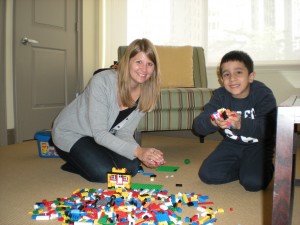
We are pleased to introduce our newest friend, Jai, to the Brooklyn Letters community! Jai and his mother, Varuna, reside in Delhi, India where Jai attended an English speaking school. For the next two months, they temporarily relocated to New York City and Jai will receive intensive speech-language therapy with a focus on literacy development: Craig provides services 1 day per week in his home-based office and Sarah provides services 4 days per week (sessions last 3 hours) in the family’s Manhattan apartment. Jai is a happy, bright, curious, and creative young boy who enjoys reading books, building with legos, playing computer games, and playing with Craig’s very cool pirate ship.
Jai recently participated in an evaluation in Delhi and it was recommended that he receive individualized speech-language and literacy intervention. Jai’s parents were unable to find adequate therapy services in India; they sought out therapy services in the U.S. and Varuna’s friend, in New Jersey, recommendeded Brooklyn Letters. Varuna spoke with Craig and Sarah and they felt that they were an excellent match for Jai. At the beginning of therapy, Jai’s interests, learning style, and strengths and deficits were assessed and baseline skill levels were established. Jai’s individualized treatment plan was developed and the overall goals of therapy are as follows:
• Facilitate Jai’s overall language and literacy skills.
• Work with Jai’s mother to teach strategies to support Jai’s learning, provide activities and materials for work at home, and increase her knowledge of language, literacy, and learning. Click here to see a video of Varuna explaining Jai’s homework.
• Provide suggestions for Jai’s teachers in India to implement in the classroom setting.
• HAVE FUN!

Specific intervention targets include:
1. Increase pre-literacy and literacy skills. To include sound/symbol awareness, auditory discrimination, and rhyming.
2. Increase expressive language skills by using 3-4 word utterances to request, protest, comment, and ask for help.
3. Increase accuracy of comprehension and use of spatial concepts and prepositions (in, out, on, under, next to, behind, in front)
4. Increase memory skills and use of strategies to increase visual and auditory memory.
5. Increase accuracy and speed of word retrieval and recall of information.
6. Increase accuracy of following 2 and 3-step directions.
7. Increase accuracy of response to WH question forms and open-ended questions.
8. Increase accuracy of use of age-appropriate syntactic/grammatical forms (plurals, regular and irregular past tense verbs).
9. Increase categorical and descriptive vocabulary skills.
10. Increase sustained attention to focused tasks.

Within the first week of therapy, Jai made significant progress with his language, literacy skills, and focus. He is producing utterances of increased length, using more complex language forms, and is more confident in his overall abilities. He increased his phonemic awareness skills and is able to identify words that begin with a specific sound. He is demonstrating improved learning readiness by increasing attention to structured tasks, self-monitoring his own level of engagement during activities, and learning spatial concepts, e.g. “under.”

We are excited to have the opportunity to work with Jai and look forward to joining him on his continuing journey of learning, growth, and development of skills! Great job, Jai!

Sarah is a Speech-Language Pathologist who provides home-based assessment and therapy services in the Park Slope and Carroll Gardens neighborhoods of Brooklyn, NY. She specializes in working with children and adolescents who have difficulty with articulation, phonology, language, fluency/stuttering, literacy skill development, pragmatics, and social language. Sarah develops individualized and evidence-based therapy plans that include frequent and ongoing collaboration with parents, caregivers, teachers, and educators in order to maximize the potential of each child. She can be reached at sarah@brooklynletters.com or www.brooklynletters.com

To learn more about Jai’s progress, please read the following blog- http://brooklynletters.com/2010/11/blog/part-ii-india-comes-to-brooklyn-by-sarah-stuntebeck-m-s-ccc-slp-speech-language-pathologist/
www.brooklynletters.com

Tags: , , , , , , , , , , , , , , , , , , , , , , , , , , , , , , ,

Connecting Language Pathology with Literacy and Learning by Craig Selinger, M.S. CCC-SLP, Speech Language Pathologist

Saturday, October 16th, 2010

The scope of speech language pathology is diverse and one of my goals for the Brooklyn Letters website is to educate others about my profession. When I meet new people and we discuss what I do professionally, I find it difficult to give a brief explanation about language pathology and its treatment.

“Reading and writing? What does that have to do with speech?” Is a common reaction from those inquiring about what I do. Unlike language pathology, speech pathology is more straightforward to explain to others, e.g. child has difficultly enunciating the “r” sound.

I recently read an article from a journal that I find very helpful for those interested in learning more about how language pathology connects with literacy and learning.

The following excerpt is from the article “Back to School: Why the Speech-Language Pathologist Belongs in the Classroom,” by Dr. Marilyn A. Nippold. Marilyn A. Nippold, Ph.D., holds an Endowed Professorship at the University of Oregon where she has worked since 1982, teaching and conducting research in later language development, literacy, language disorders, and stuttering.

Back to School: Why the Speech-Language Pathologist Belongs in the Classroom

Sam is a 12-year-old boy who recently began the sixth grade at a rural middle school. Like many of his classmates, Sam spent a relaxing summer playing baseball, fishing, and swimming at a nearby lake. However, now that the school year is underway, he is experiencing increasing frustration in the classroom. Unlike most of his classmates, Sam has a language disorder.

If a sixth-grade child such as Sam has deficits in syntax (grammar), the lexicon (vocabulary), word decoding, and reading comprehension, those deficits are likely to continue into adulthood if left untreated by qualified professionals (Nippold & Tomblin, 2010). Moreover, Sam’s frustration in the classroom is likely to increase as the language demands become even greater during middle school and high school, resulting in a diminishing sense of confidence, optimism, and enjoyment of academic pursuits.

On the other hand, if Sam’s language deficits are promptly identified by a speech-language pathologist (SLP), they can be addressed through an intervention program that targets practical aspects of spoken and written communication, focusing on the language demands of the classroom.

In science, Sam’s class is studying coral reefs, and students are expected to read and understand the following passage:

Like rain forests, coral reefs contain many animals and plants that produce potentially valuable chemicals. For this reason, it is important to protect the reefs from damage from many sources. Unfortunately, reefs are in danger from natural disasters and from humans. Natural forces, such as water that is too warm, can kill corals and produce a phenomenon called coral bleaching. Organisms that eat living corals, such as the crown-of-thorns sea star, can greatly damage reefs. (Coolidge-Stoltz, Padilla, Miaoulis, & Cry, 2002, p. 326)

Notably, this passage contains several features that often prove challenging to older children with language disorders. Syntactically, the sentences are long and complex, and several of them contain relative clauses (that produce potentially valuable chemicals, that is too warm, that eat living corals) that may tax a child’s working memory. The passage also contains literate vocabulary in the form of adverbial conjuncts (for this reason, unfortunately), abstract nouns (sources, phenomenon), and technical terms (coral bleaching, organisms, crown-of-thorns sea star).

After reading about coral reefs and listening to the teacher’s lectures, students are expected to demonstrate their knowledge of the topic by answering questions on an essay exam. They are also asked to make individual and group oral presentations to the class on the topic.

By spending time in a middle school classroom, we realize that to succeed in school, a sixth-grade child with a language disorder must be assisted to use and understand complex syntax and literate vocabulary; to learn new information through listening and reading; and to demonstrate knowledge through speaking and writing. Practical information such as this is invaluable in establishing functional goals for language intervention, thereby helping the child to realize his academic potential and to have reasonable options in life. Assisting children in this way also offers long-term benefits to society, helping to build a workforce of competent young adults who can give back to their communities through productive and stable employment.

The full article can be accessed, for free, at http://lshss.asha.org/cgi/content/full/41/4/377?etoc and it was published in Language, Speech, and Hearing Services in Schools, Vol.41, 377-378, October 2010.

Craig Selinger is a pediatric speech language therapist with a private practice in Park Slope, Brooklyn. He works with babies and pre-adolescents with speech, language, feeding delays and difficulties. In addition, he provides specialize tutoring services (reading, writing, speaking, and listening) for struggling learners and those with unique differences. His speech, language, literacy, and feeding team travels to your home and your child’s school throughout Brooklyn, Manhattan, and Queens. Contact: craig@brooklynlearning.com, 347-394-3485, www.brooklynlearning.com.

Tags: , , , , , , , , , , , , , , , , , , ,

The Launching of Brooklyn Letters by Craig Selinger, M.S., Speech Language Pathologist

Thursday, July 15th, 2010

My name is Craig Selinger, and I am a speech language pathologist, also known as a speech therapist, who lives in Park Slope, Brooklyn. Starting in September, I will work full-time in the area; no more back and forth Manhattan commuting. My services include child speech, language, and feeding therapy and language remediation, e.g. reading and writing.

I am very excited to launch Brooklyn Letters! Seven months of steady work on the website and now it is live. Brooklyn Letters will be a dynamic forum: updated blogs, articles, and resources. We want to create services based upon your needs. Here are some future ideas/plans:

UPDATES

BROOKLYN Letters TEAM

Dr. Annette Hernandez and I will soon be adding more professionals to our team.

BLOG

Every member of the Brooklyn Letters team will contribute to our interdisciplinary blog. Check-in monthly for new entries.

Other ideas about the blog:
1) Contacting professors/researchers to make research more accessible to the public.
2) Extending our interdisciplinary blog to other pediatric professionals in the New York City area. If you would like to contribute to our blog, please email me your name, phone number, area of expertise, and the topic you would like to write about. I am limiting blog entries to one page and one per month. Each month will have a different professional contributor.

RESOURCES

Did I miss an important resource? Please email me the link, and I will consider adding it.

LOCAL

We have a FREE Brooklyn (Park Slope and nearby neighborhoods) private business and local pediatric professional (for those offering unique services) directory.

GROUP SERVICES

If you are interested in small group services (3 children) please fill out this form and email it back to me. I teach language learning, literacy, and social skills to small groups. Creating these groups is cumbersome due to the difficultly coordinating schedules and matching learning needs. My goal is to organize compatible small learning groups.

HIRING PROFESSIONALS

If you are a pediatric professional interested in home-based services in the Park Slope and/or and nearby communities, please email me your résumé.

FEEDBACK FROM YOU

How can we improve this site? Email me your ideas.

FUTURE

I am very excited to see how Brooklyn Letters will help contribute to Brooklyn, and watch it help parents from around the world learn more about their child’s development.

THANKS

Many thanks to Brent and Teresa (my amazing website designers), Amy Way (photographer), the families that allowed me to be photographed with their children, Evan, Noreen, Chino, and Maryam. It was a team effort and I appreciate everyone’s important contributions and endeavors!

RECENT NEWS

We are now offering speech, language, and feeding services/therapy in Bay Ridge, Dyker Park and Dyker Heights, and Bensonhurst! If you are interested in Kristi, a speech language pathologist, coming to your home, contact Craig at craig@brooklynlearning.com

We will be expanding our speech, language, and literacy services to your home in Queens- Sunnyside, Woodside, Long Island City, Astoria, and we will be expanding our speech and language services to your home in Williamsburg, Greenpoint, Bushwick.

We welcome Emily Harms, M.S. CCC-SLP- a speech language pathologist that comes to your Manhattan home. She travels to Gramercy Park, Midtown, Murray Hill, Flatiron District, Chelsea, Nolita, Soho, Greenwich Village, West Village, Battery Park City, Financial District, Lower East Side, East Village, Williamsburg

Please contact Craig for more information craig@brooklynlearning.com

11215 11217 ABA Applied Behavioral Analysis apraxia Apraxia of speech articulation articulation delay asperger aspergers auditory processing autism autism spectrum bay ridge bensonhurst Bilingualism Boerum Hill Brooklyn brooklyn heights CAPD Carrol Gardens Center central auditory processing disorder Cobble Hill Communication Communication Center disorder dyker heights dyker park dyslexia Dyspraxia early childhood eating therapist enunciation ESL evaluation expressive language delay feeding delay feeding therapist floor time fluency Fort Greene language based learning disability language delay language pathology language processing late talker Learning lisp literacy literacy specialist Manhattan mixed expressive receptive language delay New York New York City NYC oral motor parent training Park Slope park slope communication PDD-NOS pervasive development disorder PDD phonological delay phonological disorder picky eater pragmatic language Private Private Speech Language Pathologist Private Speech Therapist private therapist PROMPT reading reading specialist receptive language delay Red Hook remediation school age SEIT social language delays social skills specialist speech delay Speech Language Pathologist speech language pathology speech pathologist speech pathology speech techniques speech therapist speech therapy stuttering therapist therapy treatment Windsor Terrace writing program speech therapy program preschool infant elementary student child baby Kensington Sunset Park Ditmas Park Flatbush Gramercy Park, Midtown, Murray Hill, Flatiron District, Chelsea, Nolita, Soho, Greenwich Village, West Village, Battery Park City, Financial District, Lower East Side, East Village, Williamsburg

Craig Selinger is a pediatric speech language therapist with a private practice in Park Slope, Brooklyn. He works with babies and pre-adolescents with speech, language, feeding delays and difficulties. In addition, he provides specialize tutoring services (reading, writing, speaking, and listening) for struggling learners and those with unique differences. His speech, language, literacy, and feeding team travels to your home and your child’s school throughout Brooklyn, Manhattan, and Queens. Contact: craig@brooklynlearning.com, 347-394-3485, www.brooklynlearning.com.

Tags: , , , , , , , , , , , , , , , , , , , , , , , , , , , , , , , , , , , , , , , , , , , , , , , , , , , , , , , , , , , , , , , , , , , , , , , , , , , , , , , , , , , , , , , , , , , , , , , , , , , , , , , , , , , , , , , , , , , , , , , , , , , , , , , , , , , , , , ,


Enable Javascript